
Trusted agent design is layered. Salesforce supplies a platform baseline for model interactions, but the organization still owns the business-specific boundaries around access, actions, escalation, and acceptable use.
The strongest pattern combines platform protection with least privilege, scoped grounding, deterministic controls, observable execution, and a deliberate human handoff for high-impact or unusual cases.
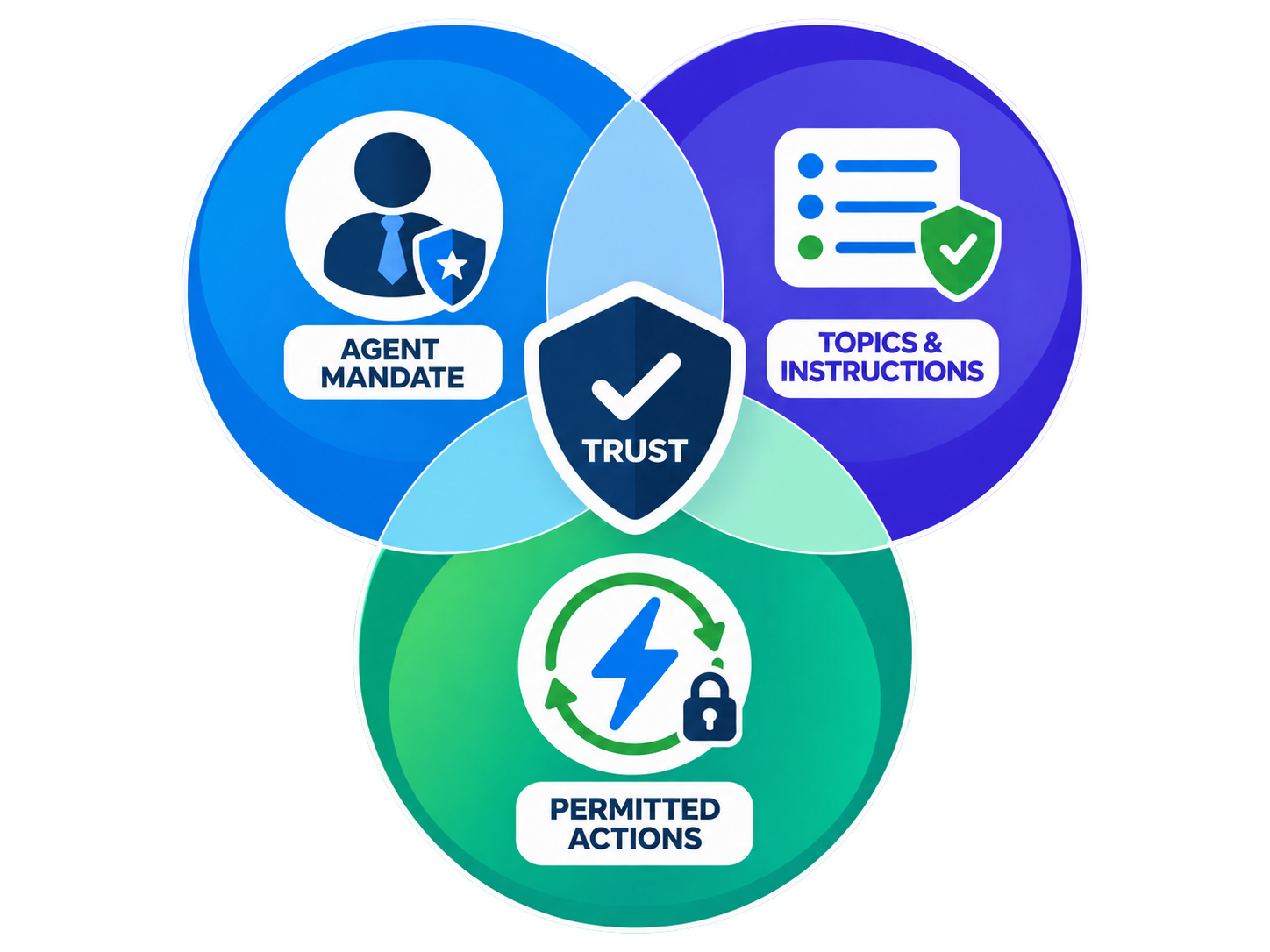
The trust stack
- Platform protections secure the model interaction; they do not decide whether a refund, disclosure, or account change is appropriate for your business.
- Permissions and sharing define the record boundary, while retrievers and knowledge libraries define the knowledge boundary.
- Actions should expose only the minimum capability and fields required for a single job.
- Human escalation is a designed operating path, not a generic fallback message after the agent becomes uncertain.
Apply the pattern
- Separate inherited Salesforce protections from the controls your team must configure and own.
- Review the combined reach of permissions, actions, and data sources instead of approving each item in isolation.
- Define specific escalation triggers and include a useful context summary in every handoff.
- Capture tests and traces so trust claims can be demonstrated after deployment.
Resources
This article is based on the following Salesforce learning and product documentation.