
AI risk management turns individual safety concerns into a repeatable operating system. It identifies possible harm, estimates likelihood and impact, chooses treatment, names an owner, and tracks evidence over the lifecycle of the use case.
For agents, the risk picture changes whenever autonomy, data, actions, users, channels, integrations, or models change. A one-time launch review cannot govern a system that keeps evolving.
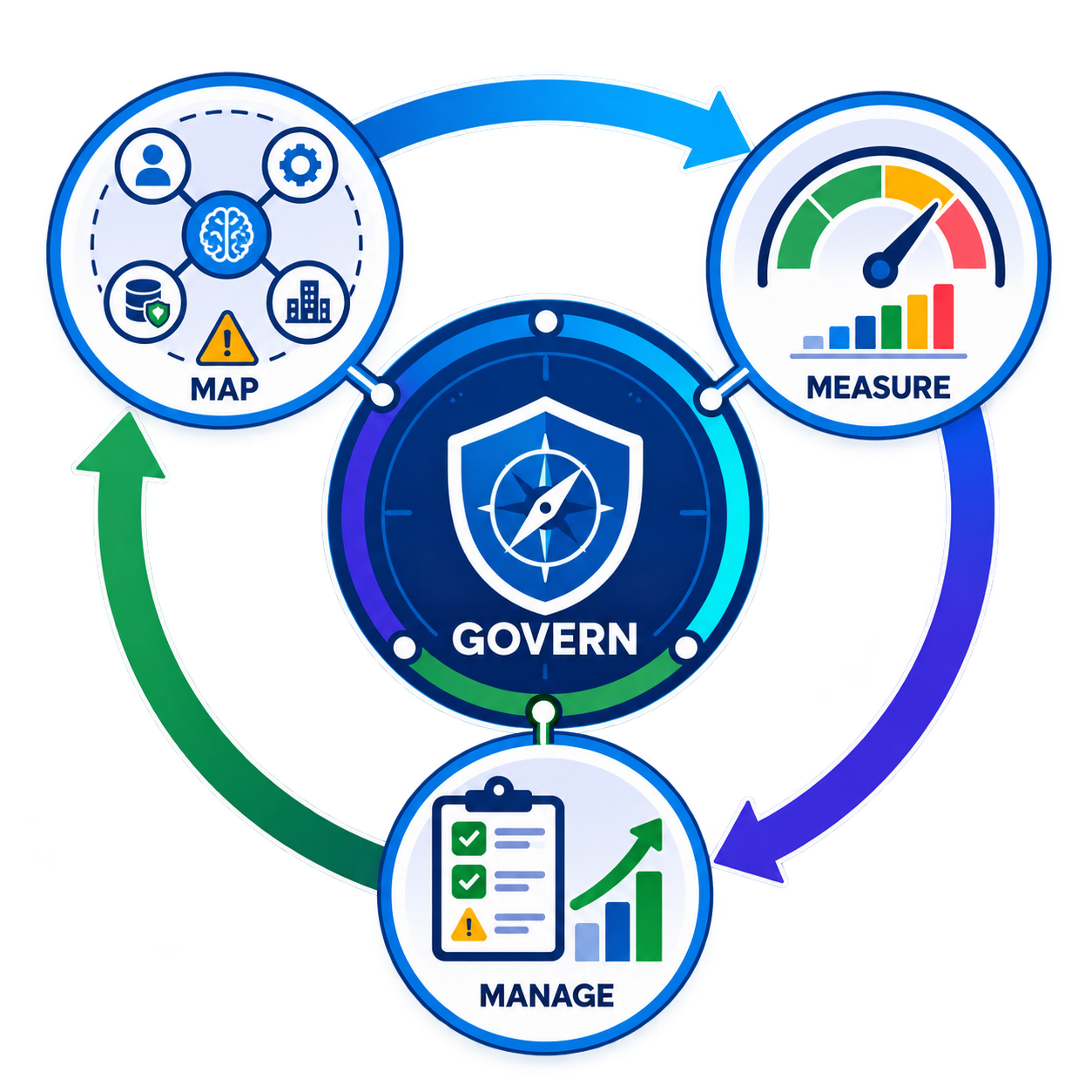
Manage risk as a portfolio
- Assess people, business, technology, and data risks for each specific use case.
- Separate inherent risk from residual risk after controls and record the assumptions behind both.
- Assign accountable business owners, not only technical implementers, to consequential decisions.
- Use evidence from tests, traces, incidents, audits, and user outcomes to update the assessment.
Establish the governance cycle
- Create a risk register linking each risk to controls, tests, metrics, owner, and review date.
- Define approval thresholds and conditions that require escalation or suspension.
- Review material changes before release and monitor leading indicators after deployment.
- Run periodic access, data, performance, and control-effectiveness reviews with retained evidence.
Resources
This article is based on the following Salesforce learning and product documentation.