
An agent's scope becomes implementable when broad goals are decomposed into specific jobs. Each job should identify the user intent, required information, permitted actions, completion signal, and exception path.
This outline becomes the bridge between a business process and Agentforce configuration. It also makes scope creep visible before new capabilities silently expand the agent's authority.
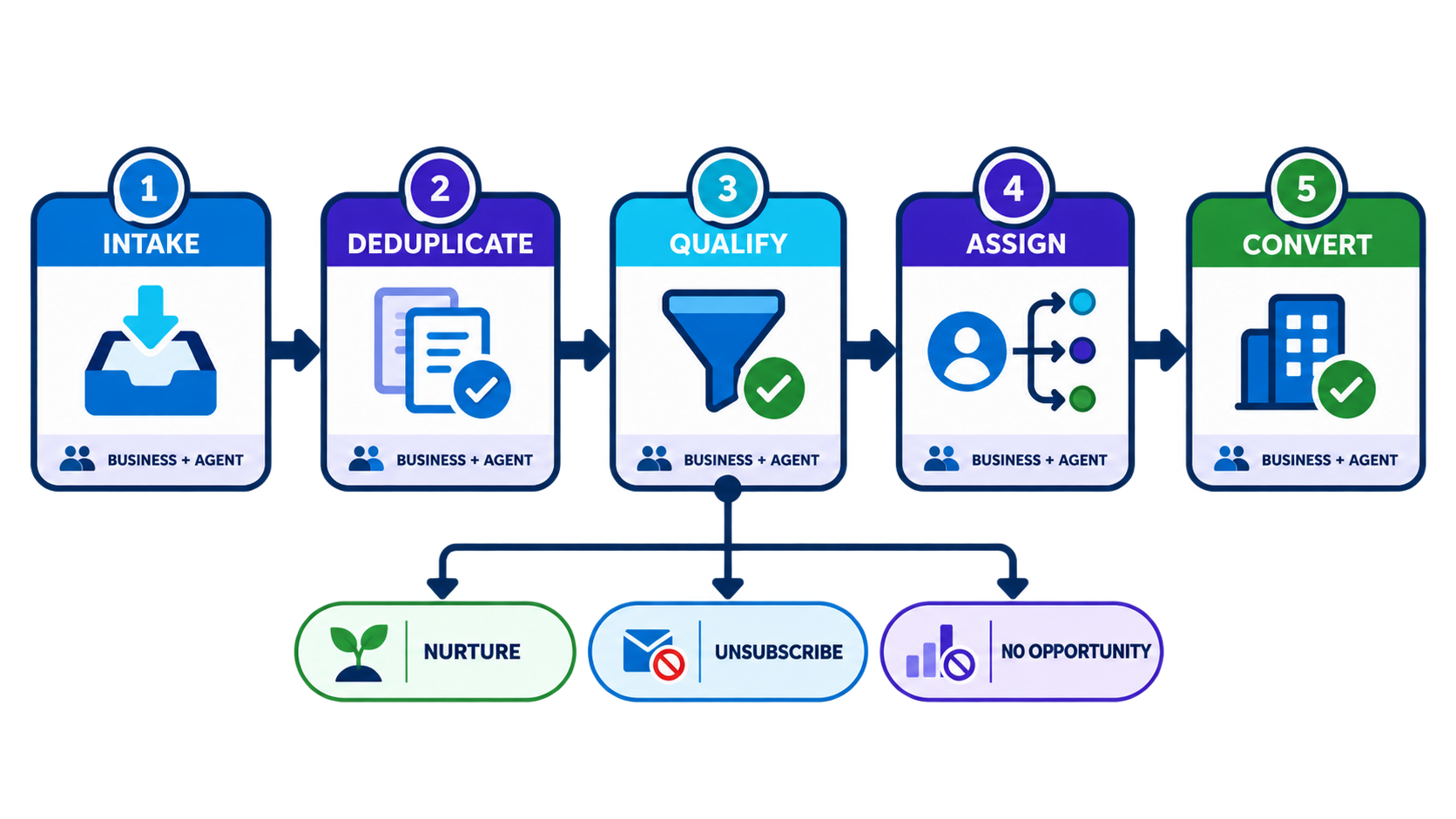
Describe work as bounded jobs
- Group related intents into subagents with clear responsibilities and non-overlapping descriptions.
- Give each action one purpose and specify the conditions under which it may be selected.
- Identify the authoritative data required for the job and avoid passing unrelated context.
- Define completion, refusal, retry, and human escalation as first-class outcomes.
Build the work map
- List top user requests from real workflow evidence rather than imagined prompts.
- Map every request to subagent, inputs, actions, outputs, and owner.
- Mark high-impact actions and add eligibility, approval, and audit requirements.
- Remove jobs that lack reliable data, a safe action path, or an accountable owner.
Resources
This article is based on the following Salesforce learning and product documentation.