
Agent evaluation asks whether the system behaves well across a distribution of real tasks, not whether one response is technically correct. Quality includes factuality, relevance, completeness, tone, policy compliance, action correctness, and business outcome.
The evaluation design should reflect risk. A low-impact phrasing variation and an unauthorized financial action cannot carry the same weight.
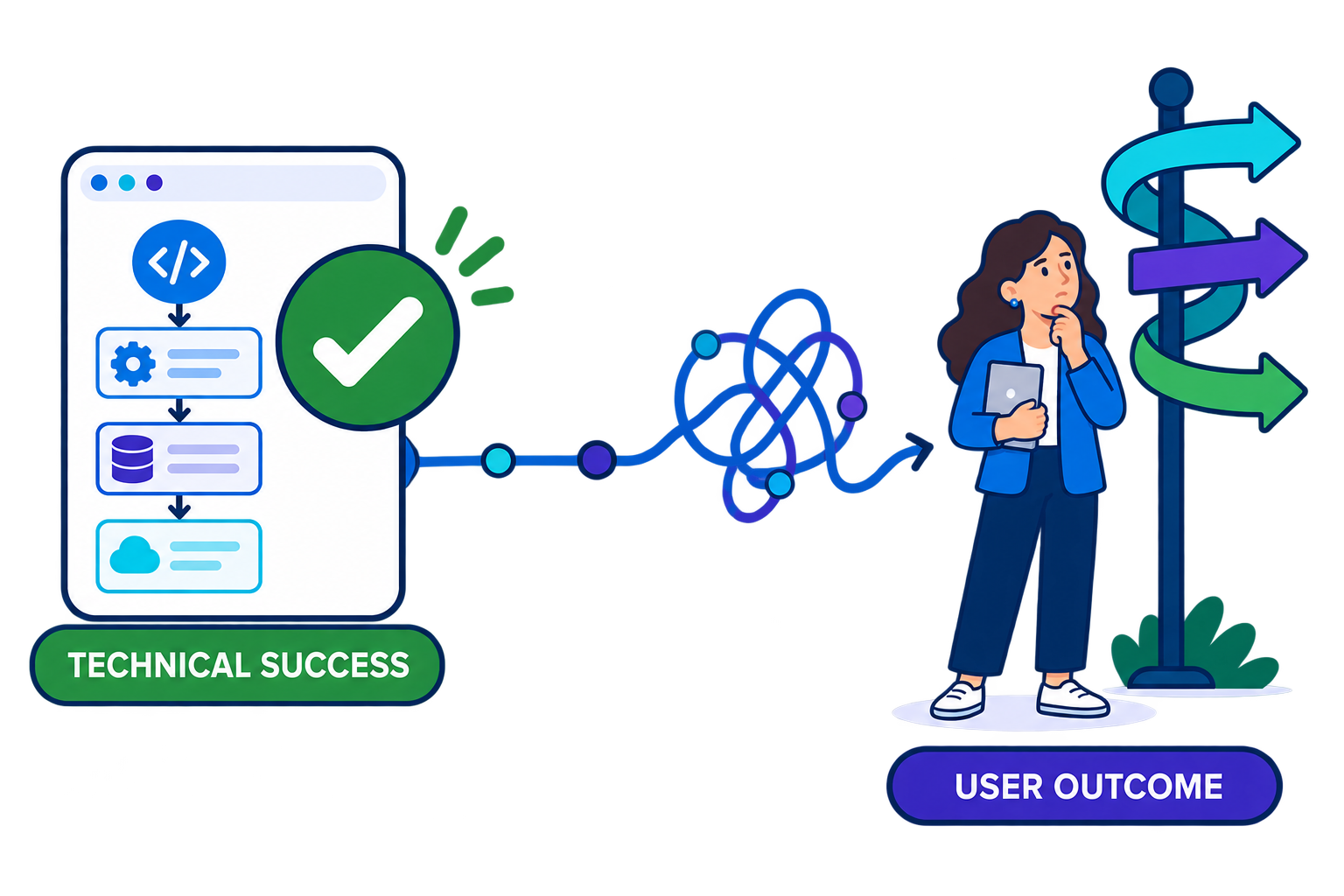
Measure behavior from several angles
- Combine deterministic checks, model-based evaluation, operational metrics, and targeted human review.
- Segment results by job, channel, user group, language, and risk level instead of relying on one average.
- Measure consistency across repeated and paraphrased inputs because model outputs vary.
- Connect quality scores to real outcomes such as resolution, escalation, correction, abandonment, and user satisfaction.
Build an evaluation program
- Define a rubric with examples of passing, weak, and unacceptable behavior.
- Create representative and adversarial datasets with explicit coverage targets.
- Calibrate automated evaluators against human judgments and review disagreements.
- Baseline before launch and monitor for meaningful drift after every release.
Resources
This article is based on the following Salesforce learning and product documentation.