
Customer context often lives across CRM, commerce, service, web, and external systems. Data 360 can harmonize that evidence so an agent receives a more coherent view instead of reasoning over disconnected identifiers and stale copies.
A unified profile increases usefulness and risk at the same time. Identity resolution, calculated insights, permissions, consent, and purpose limitation must be part of the agent design.
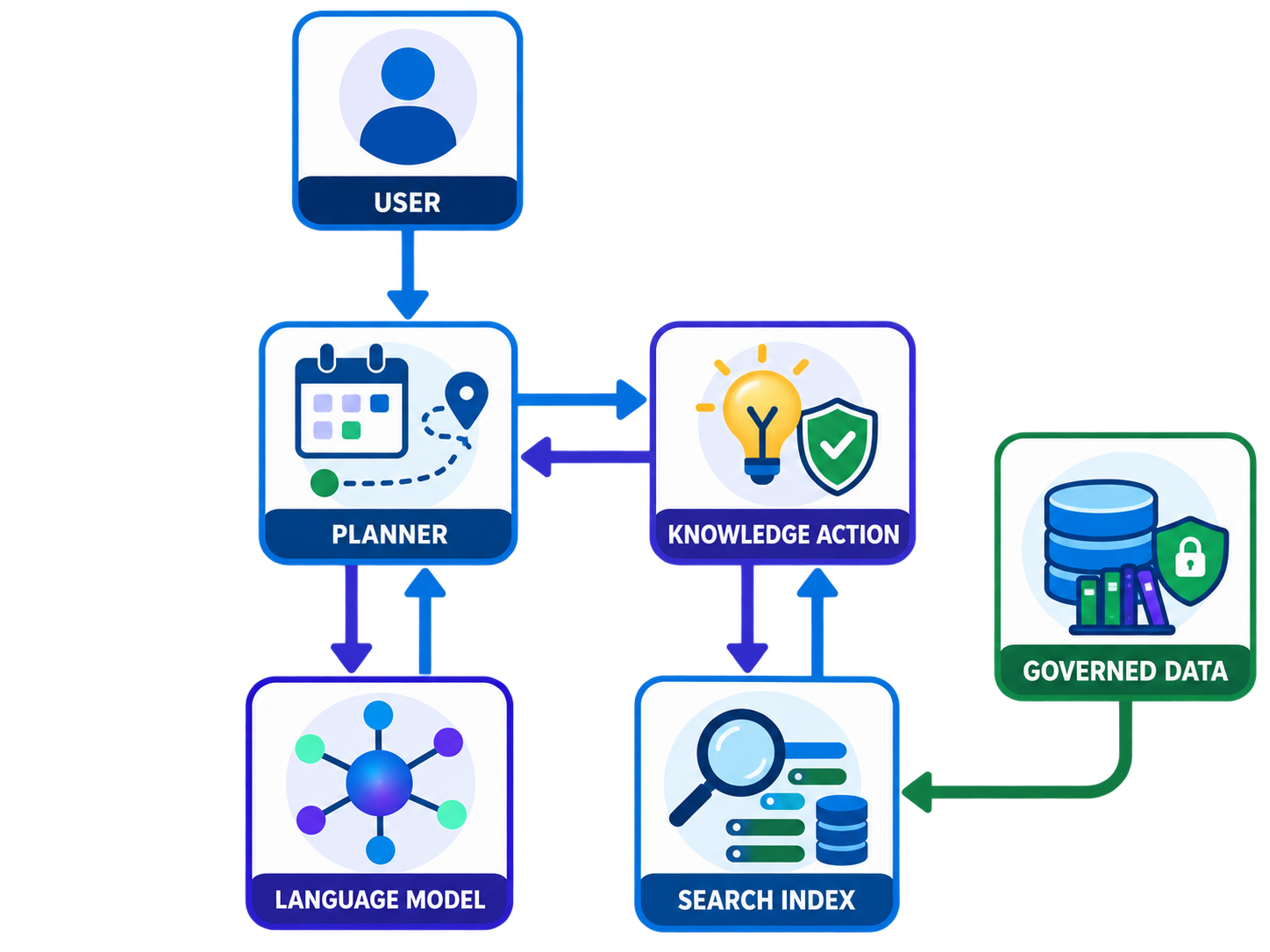
Use unified context deliberately
- Select only the attributes needed for the agent's current job rather than exposing the entire unified profile.
- Understand identity-resolution confidence and the consequence of joining the wrong records.
- Apply consent, classification, and access policy before the data reaches grounding or an action.
- Distinguish current transactional facts from derived scores and explainable calculated insights.
Connect data to an agent use case
- Map the job to required source fields, unified attributes, and freshness requirements.
- Test profiles with missing, conflicting, recently changed, and incorrectly matched data.
- Limit retrieval and action inputs to the minimum context required.
- Trace which data informed consequential recommendations and provide human review where appropriate.
Resources
This article is based on the following Salesforce learning and product documentation.