
An effective AI solution begins with a job worth improving, not with a model feature looking for a use case. The design should name the user, desired outcome, current friction, available evidence, acceptable autonomy, and how success will be measured.
Scoping this work early prevents the agent from becoming a general-purpose interface with unclear ownership and an ever-growing set of permissions.
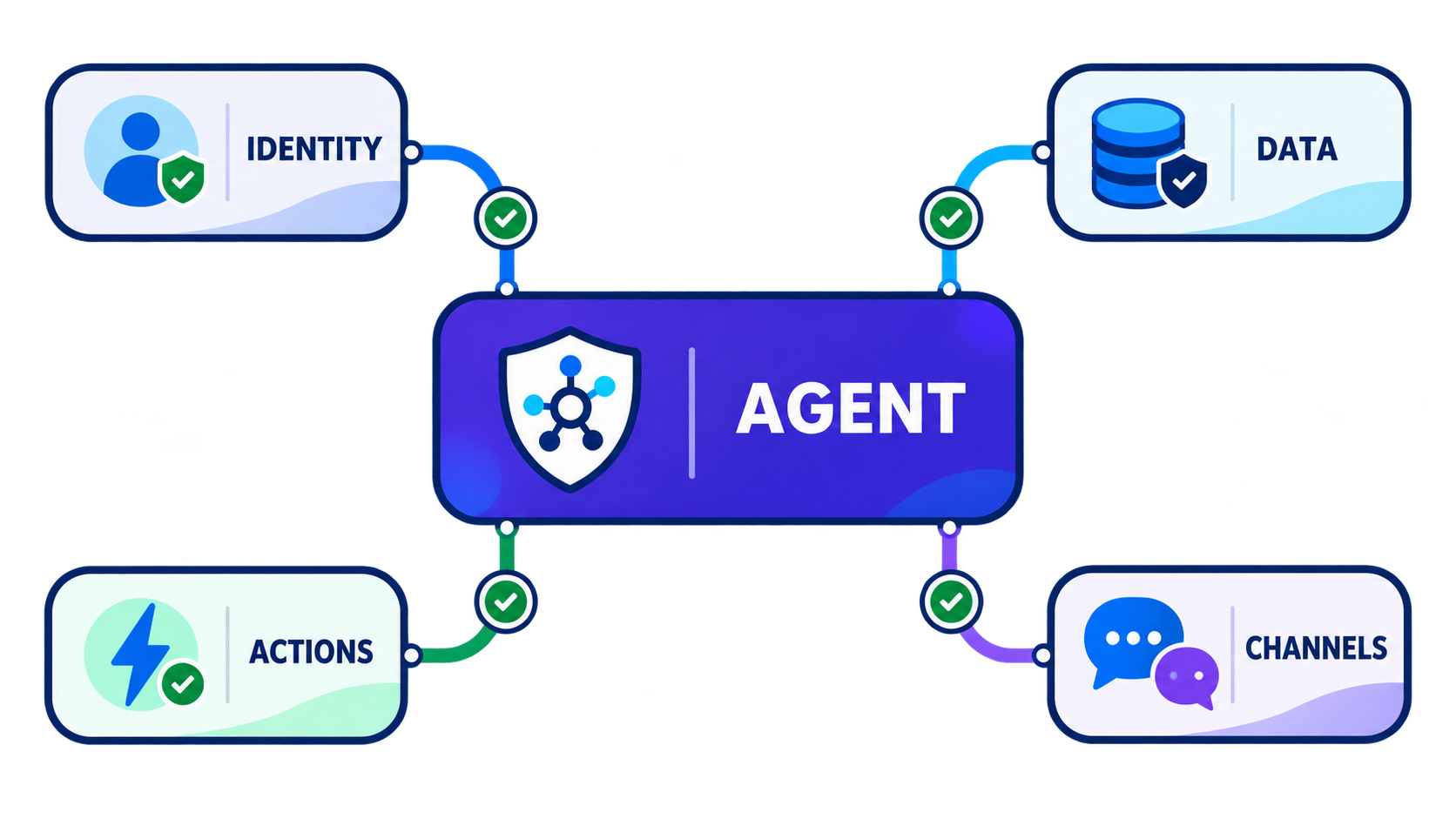
Frame the solution before configuration
- Choose a bounded, frequent job with enough reliable data and a clear definition of success.
- Distinguish assistance, recommendation, and autonomous action because each requires different controls.
- Identify the business owner, operational team, security reviewer, and escalation destination.
- Define measurable value together with safety, quality, and adoption thresholds.
Create the solution brief
- Document the current workflow, pain points, users, channels, data, actions, and exceptions.
- Write explicit in-scope and out-of-scope statements.
- Map every high-impact step to a deterministic control or human decision.
- Select a pilot cohort and baseline the existing human process before comparing agent outcomes.
Resources
This article is based on the following Salesforce learning and product documentation.